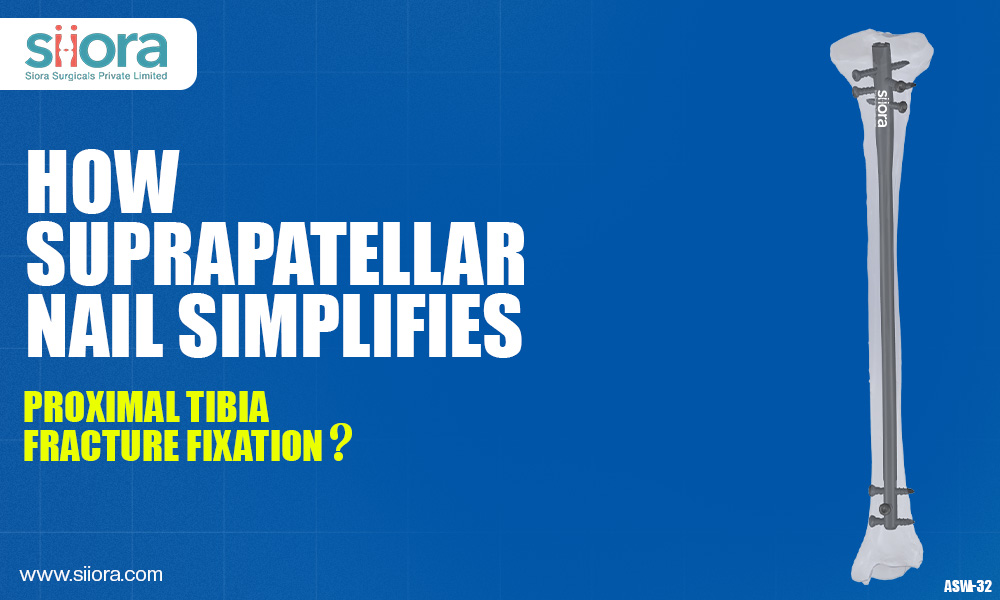
Fractures near the top of the tibia, right below the knee, can easily become a real puzzle. The area is tricky because it supports a lot of weight and is right next to the complex knee joint. For surgeons, fixing these kinds of breaks means balancing solid bone stabilization with protecting the knee’s delicate structures. The standard method, using nails inserted below the kneecap, often means bending the knee hard during surgery, which can make it tough to line things up perfectly.
That’s where the suprapatellar nail steps in, it offers a fresh take on how to approach this challenge, simplifying things quite a bit.
What’s the Suprapatellar Nail About?
Basically, the suprapatellar nail is an intramedullary rod placed inside the tibia, but the catch is in how surgeons get it in, through a small entry point above the knee cap, rather than below it. It may sound like a tiny change, but it actually makes the whole procedure smoother.
Why This Approach Feels Easier in the OR?
Inserting the nail below the kneecap (infrapatellar approach) usually means bending the knee nearly all the way. That can twist up alignment, especially on fractures close to the knee itself. The suprapatellar way lets surgeons keep the knee in a gentler, semi-straight position, which helps them see and control the broken bone pieces better.
The bonus? Less time fiddling around means the operation can often be shorter, and everyone in the room gets less X-ray exposure.
Protecting the Knee while Fixing the Tibia
One big worry with these surgeries is knee health afterward. Going beneath the kneecap can sometimes irritate the joint or cause pain later on. With suprapatellar nailing, the nail slides in above the kneecap, passing through a tendon area that seems to tolerate it better than the cartilage underneath the kneecap.
Patients often tell their doctors they have less lingering pain around the front of the knee after this method—always a win when you want folks to get back on their feet quickly.
Better Healing, Less Pain
The improved positioning and control during surgery don’t just make the surgeon’s job easier, they also pave the way for better healing. The bones stay lined up nicely during the operation and afterwards, reducing the risk of things shifting out of place.
Patients usually report less pain after surgery and can start moving sooner. That jump-start in rehab makes a big difference in how quick and complete their recovery is.
When Should It Be Used?
While the suprapatellar nail works well for many proximal tibia fractures, it really shines when the break is close to the knee, where traditional nails struggle the most. It’s also handy for patients who can’t bend their knees far because of injury, swelling, or other reasons.
What about the Risks?
As with every surgery, there’s a small risk to consider. Some worry about damage to knee cartilage with this approach, but with careful technique and the right tools, that risk stays low. Infection rates are similar to other types of fixation. Proper training and experience play a key role in keeping things safe.
Why Surgeons Are Liking This Approach?
More and more surgeons are catching on because it streamlines surgery and helps patients feel better faster. The learning curve isn’t steep, and once you get the hang of the technique, it’s a reliable way to handle tough proximal tibia fractures.
Bottom Line
The suprapatellar nail isn’t just a new trend, it’s a clever twist on fixing a tricky fracture. By letting surgeons work with the knee in a better position and protecting the sensitive parts of the joint, it makes a tough surgery easier and recovery smoother.
For many patients, this means less pain, fewer complications, and a quicker return to everyday life. That’s what good orthopedic care is all about.
If you want to get an international standard range of suprapatellar nails and other trauma implants, explore the inventory of Siora Surgicals Pvt. Ltd. The company will also showcase its innovative and advanced orthopedic implants at WHX Dubai 2026.
 Siora Surgicals Pvt. Ltd.