Hip fractures are among the most demanding injuries an orthopedic surgeon manages, especially in elderly patients with fragile bone. Over the years, intramedullary fixation has become the preferred approach for many of these fractures. However, not all nails perform the same. The introduction of Intertan nails has changed how surgeons approach hip fracture fixation, offering better stability, controlled compression, and improved patient outcomes.
The Challenge of Hip Fracture Fixation
Intertrochanteric and subtrochanteric fractures are unstable by nature. Poor bone quality, high mechanical stress, and early weight-bearing demands make fixation difficult. Traditional intramedullary nails often control length and alignment, but rotation and collapse can still be a concern. Complications such as screw cut-out, varus collapse, and loss of fixation are well known and frustrating, even when the surgery is technically sound.
This is where the Intertan nail design stands apart.
Understanding the Intertan Nail Design
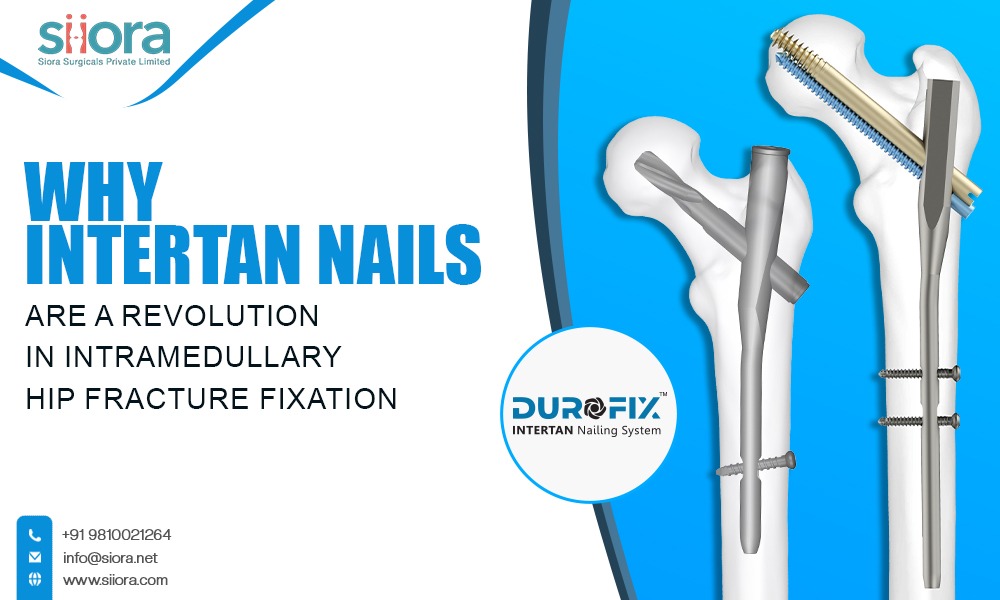
The Intertan nail uses a dual integrated screw system rather than a single lag screw. These two screws work together to provide rotational control and linear compression at the fracture site. Instead of relying on one point of fixation in the femoral head, the Intertan system stabilizes the fracture more evenly.
This design allows controlled compression across the fracture, which helps maintain reduction during healing. The result is a construct that feels more stable during surgery and remains stable during rehabilitation.
Better Rotational Stability
One of the biggest advantages of Intertan nails is improved rotational stability. In traditional nails, rotation of the femoral head fragment can still occur, especially in unstable fracture patterns. The dual screw configuration of the Intertan nail significantly reduces this risk.
By locking the femoral head fragment more securely, the nail minimizes micromotion that could otherwise lead to fixation failure. This is particularly important in osteoporotic patients, where bone purchase is already compromised.
Reduced Risk of Screw Cut-Out
Screw cut-out remains one of the most feared complications in hip fracture surgery. The Intertan nail addresses this issue by distributing forces more evenly across the femoral head. Instead of concentrating stress at a single point, the load is shared between two screws.
This reduces excessive sliding and helps maintain head–neck alignment. Many surgeons report fewer cut-out cases when using Intertan nails, especially in unstable fracture patterns.
Controlled Compression for Better Healing
Another key feature of the Intertan system is its ability to provide controlled intraoperative compression. Compression plays an important role in fracture healing, particularly in intertrochanteric fractures. With Intertan nails, compression can be applied gradually and precisely, helping the fracture surfaces remain in contact.
This controlled approach supports biological healing while avoiding excessive collapse, which can shorten the limb or alter hip mechanics.
Early Mobilization and Patient Confidence
Stable fixation allows for early mobilization, which is crucial in hip fracture patients. When fixation feels solid, surgeons are more comfortable allowing early weight bearing, and patients gain confidence sooner.
Early mobilization reduces the risk of complications such as bed sores, pneumonia, and muscle wasting. In elderly patients, this can significantly influence overall recovery and quality of life.
Surgeon-Friendly and Reproducible
From a practical standpoint, Intertan nails are designed to be surgeon-friendly. Instrumentation is precise, targeting is reliable, and the learning curve is manageable. Once familiar with the system, surgeons often find the procedure reproducible with consistent results.
Conclusion
Intertan nails represent a meaningful advancement in intramedullary hip fracture fixation. Their dual screw design, improved rotational control, and ability to deliver controlled compression address many of the limitations seen with traditional nails. For surgeons dealing with complex and unstable hip fractures, the orthopaedic implant nails offer greater confidence in fixation and better support for fracture healing. This combination of mechanical stability and biological advantage is what truly makes Intertan nails a revolution in hip fracture management.
 Siora Surgicals Pvt. Ltd.